Kids Mealtime Routine Steps: Calm Dinner Plan That Works
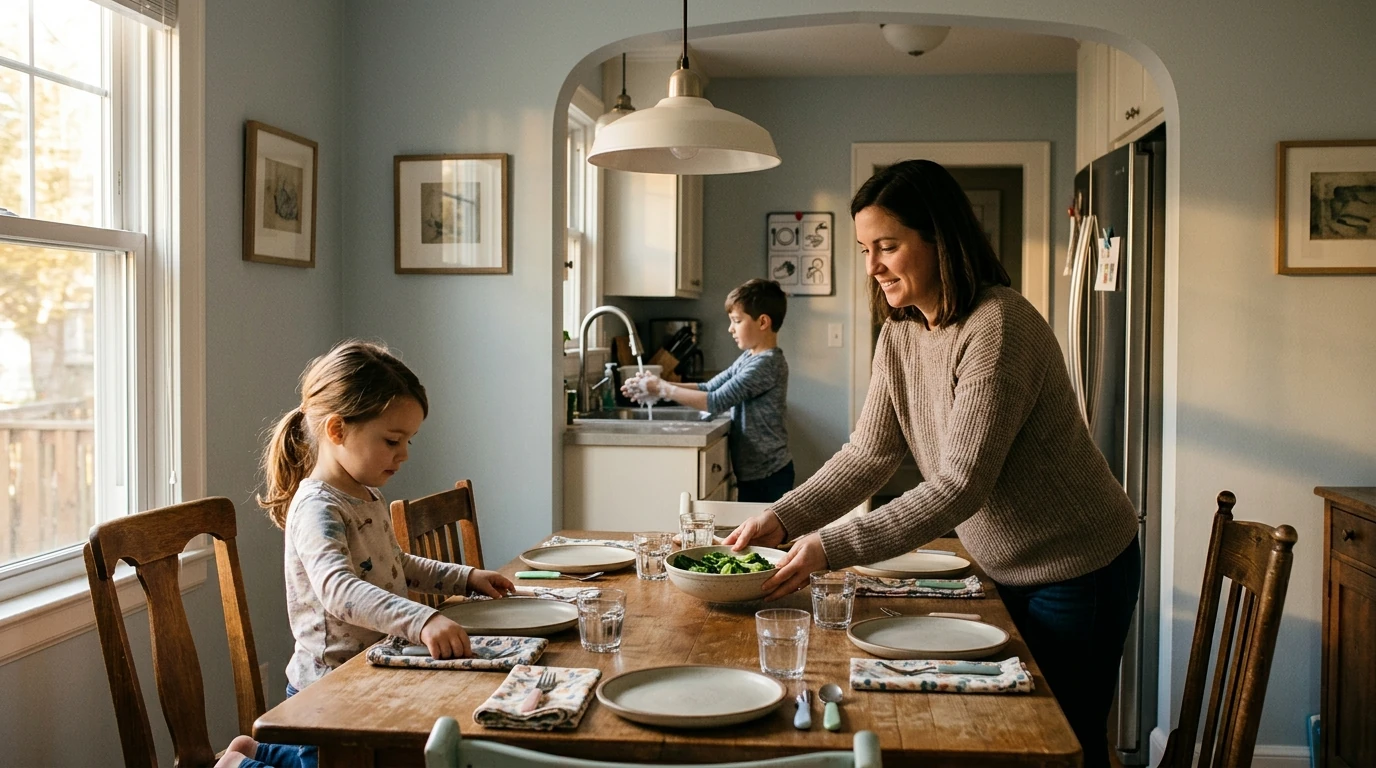
Kids’ Mealtime Routine Steps: A Calm, Repeatable Plan for Happier Meals
A consistent mealtime routine helps kids feel secure, reduces power struggles, and builds lifelong habits around food and family connection. The steps below create a predictable flow—from the transition into dinner to cleanup—so kids know what to expect and caregivers can stay steady even on busy days.
What a Strong Mealtime Routine Does (Beyond Getting Food Eaten)
When meals follow the same sequence, kids spend less energy guessing what’s coming next—and more energy practicing skills that actually stick.
- Creates predictability: the same sequence each day lowers stress and resistance.
- Builds independence: small jobs (setting napkins, pouring water, clearing plates) give kids a real role.
- Supports self-regulation: a calm start and a clear end help kids shift gears without meltdowns.
- Improves manners and conversation: simple, repeatable expectations turn “reminding” into routine.
If you want a printable plan you can keep on the fridge (and follow even when you’re tired), Kids’ Mealtime Routine Steps is a quick digital download that lays out a family-friendly sequence you can reuse daily.
Before the Meal: The 10-Minute Transition
The transition is where many mealtime battles begin—especially when kids are mid-play. Make the lead-in consistent and short.
- Give a heads-up: use a 10-minute warning, then a 2-minute warning, with the same words each day (example: “Ten minutes until dinner—then hands and table.”).
- Hands + bathroom: wash hands and use the bathroom before sitting to reduce mid-meal interruptions.
- Offer an “arrival” activity: choose a seat, set a napkin, or place utensils to help kids shift from play mode to table mode.
- Keep snacks consistent: if a snack is needed, set a firm cutoff time so appetite is intact when dinner starts.
For nutrition basics and realistic parent tips, resources like the CDC’s guidance for parents can help you keep expectations grounded while you focus on routine.
Set the Table Routine: Simple Jobs by Age
Table-setting works best when it’s predictable, doable, and clearly “finishable.” Start small, repeat often, and let competence build over time.
| Age | Jobs that usually work | Tips to prevent frustration |
|---|---|---|
| 2–3 | Placemats, napkins, cups | Use unbreakable items; praise effort, not speed |
| 4–5 | Utensils, simple condiments, wiping | Give one job at a time; keep tools kid-sized |
| 6–8 | Water pouring, serving help, counting plates | Demonstrate once; use a small pitcher and a tray |
| 9+ | Full place settings, salad/side prep, loading dishwasher | Rotate responsibilities; agree on clear “done” criteria |
Make it visual: a picture checklist, a routine card, or even two taped photos (“Set the table” and “All done”) reduces reminders and keeps the tone neutral.
Start-of-Meal Steps: The Calm Beginning
The first two minutes of the meal often decide the emotional temperature of the next twenty. Use a short, repeatable opening that signals safety and structure.
- Use a cue: a quick “dinner song,” one deep breath together, or lighting a candle (adult-only) marks the start.
- Preview the plan: share what’s being served and where seconds will be available (“Chicken is on the platter; fruit is in the bowl.”).
- Keep rules few: pick one or two—such as kind words and asking to be excused—so kids can succeed.
- Try family-style when possible: kids can practice choosing portions and learning what “enough” feels like.
For practical meal-balance ideas by age, MyPlate’s kids resources can be a helpful reference when planning what shows up on the table.
During the Meal: A Predictable Flow That Reduces Battles
A smooth mealtime rhythm comes from consistency, not intensity. Aim for calm repetition rather than perfect eating.
- Stick to clear roles: caregivers decide what/when; kids decide whether/how much (from what’s offered). This approach aligns with the widely used Division of Responsibility in feeding.
- Offer “safe” items regularly: bread, rice, fruit, yogurt, or another familiar choice means there’s always something manageable on the table.
- Keep conversation easy: try “high/low of the day,” a silly would-you-rather, or a question jar. Low-pressure talk helps picky eaters stay regulated.
- Avoid negotiating bites: skip bargains and counting bites; aim for exposure and relaxed practice with new foods.
- Use a short reset when needed: a sip of water, 10 seconds of breathing, or a calm “break spot” nearby can prevent a full spiral.
If you’re parenting a newborn or juggling early-childhood routines at the same time, First-Time Parent Survival Guide – Newborn Care, Sleep Tips, Emotional Support & Parenting Strategies Digital Download can help you stabilize the bigger daily rhythms so meals feel less like one more crisis to solve.
End-of-Meal Steps: A Clear Finish Line
Kids do better when there’s an obvious end point. A clear finish line also reduces grazing and repeated kitchen requests later.
Cleanup Routine: Make It Fast, Visible, and Fair
Common Sticking Points and Simple Fixes
FAQ
How long should a kids’ dinner take?
Many kids do best with about 15–30 minutes, depending on age and temperament. Consistency matters more than the exact length, so a gentle timer plus a clear cleanup routine can help meals end calmly.
What if a child refuses to eat what’s served?
Keep one familiar option on the table, stay neutral, and avoid pressure or bargaining. Then stick to the next planned snack or meal time rather than making multiple alternate meals.
How can a routine work when schedules change (sports, late work, travel)?
Use a minimum viable routine: wash hands, sit down, one calm start cue, and one cleanup step. Even if the meal is simpler, keeping the same sequence helps kids feel anchored.











Leave a comment