Room Lighting Plan Checklist: Layered, Glare-Free Lighting
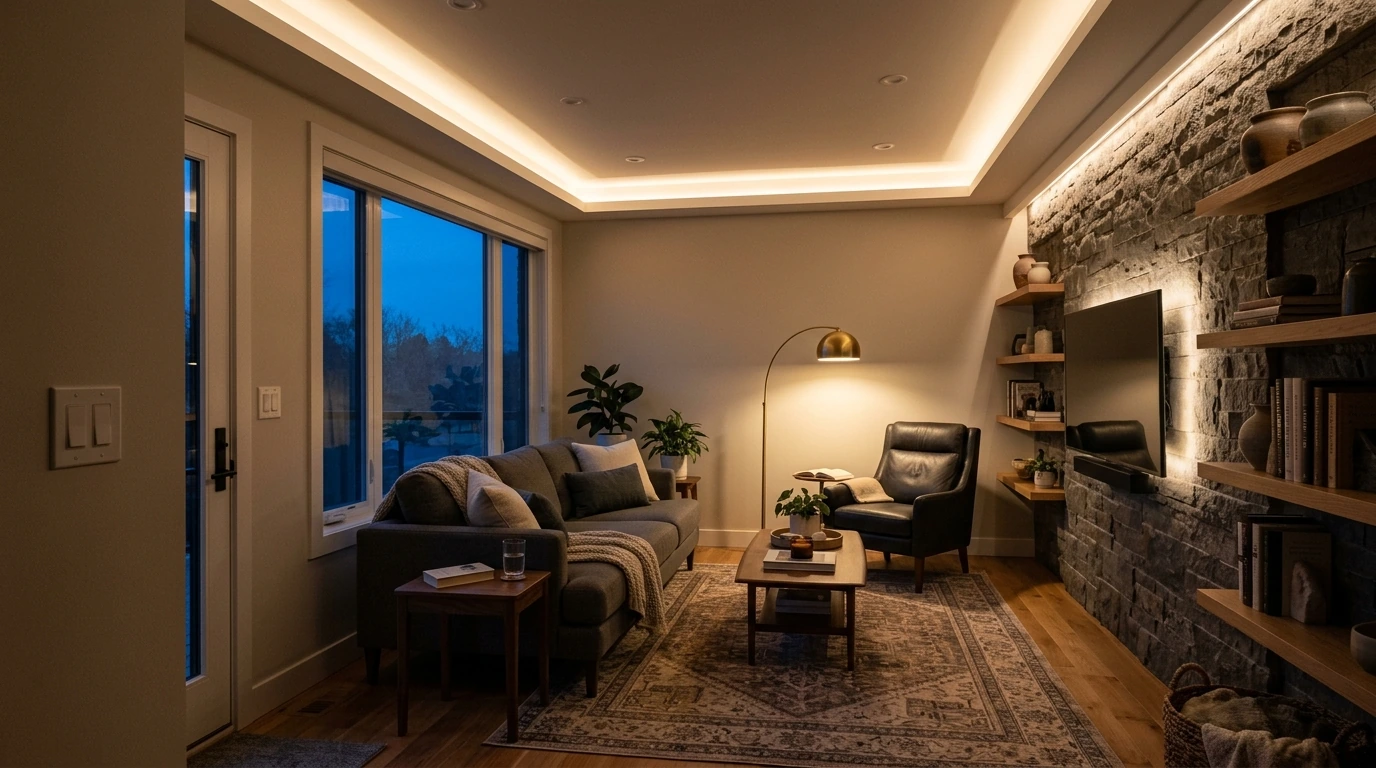
Room Lighting Plan Checklist: A Practical Guide for Balanced, Comfortable Lighting
A solid lighting plan makes a room feel comfortable, functional, and cohesive—without relying on trial-and-error. A checklist-style approach helps you map tasks, choose fixtures, set light levels, and avoid common mistakes before buying anything. The goal isn’t “more lights.” It’s the right mix of light, in the right places, with controls that match how the room actually gets used. For more guidance, see 7 Lighting Tips for Creating a Cozy Home.
What a lighting plan needs to accomplish
Great lighting is a blend of comfort and utility. Before you pick fixtures, make sure your plan supports these basics: For further reading, see The Importance of Lighting Design: A Guide by Mark Taylor Design.
- Layered light: combine ambient (overall), task (work zones), and accent (visual interest).
- Real-life schedules: plan for daytime, evening, entertaining, cleaning, and “in-between” moments.
- Less glare, fewer harsh shadows: placement matters as much as brightness.
- Flexible control: use dimmers, multiple circuits, and targeted lamps instead of relying on one center ceiling light.
Lighting layers at a glance
Most rooms feel noticeably better when they have at least two layers of light. Three layers gives the most flexibility, especially if the room needs to shift from “work mode” to “relax mode” without changing furniture or decor.
- Ambient: choose indirect or diffused sources when possible for softer, room-filling light.
- Task: put brightness exactly where hands and eyes work—desks, counters, reading chairs, mirrors.
- Accent: treat it like part of the design plan (art, shelves, textured walls, niches) so the room has depth.
Lighting layers, goals, and common fixture choices
| Layer | Primary goal | Good fixture types | Typical placements |
|---|---|---|---|
| Ambient | Even, comfortable overall brightness | Ceiling fixtures, recessed lights, cove lighting, floor lamps with shades | Ceiling center, perimeter, uplight corners |
| Task | Focused light for activities | Desk lamps, under-cabinet lights, vanity lights, pendant over work surface | At the work zone: desk, countertop, reading chair, mirror |
| Accent | Highlight features and add depth | Picture lights, wall washers, track heads, shelf LEDs, spotlights | Art, built-ins, plants, textured walls, niches |
Step-by-step room lighting plan checklist
Use this sequence to plan quickly without missing details that cause “almost right” lighting.
- Define activities: list 3–6 key tasks (reading, cooking, makeup, gaming, homework, cleaning).
- Sketch the room: mark doors, windows, seating, work surfaces, TV/screens, and art locations.
- Plan ambient light: choose the main sources and where they’ll be switched from.
- Add task lighting: place focused lights at each task zone; avoid lighting from behind the user that throws shadows onto the work.
- Add accent lighting: pick 1–3 focal points (art, shelves, architectural details) and decide how to highlight them.
- Choose bulb characteristics: color temperature (warm to neutral), CRI (color quality), and beam angle (spot vs. wide).
- Confirm control strategy: dimmers, smart controls, or separate circuits for each layer.
- Check glare: avoid bare bulbs in direct view; watch mirror reflections and screen glare.
- Measure and verify: confirm fixture sizes, mounting heights, spacing, and clearance around doors/cabinets.
- Make a shopping list: fixtures, bulbs, dimmers, smart switches, extension cords (for temporary testing), and cable management.
If you want a ready-to-use template for capturing measurements, zones, and bulb specs in one place, the Room Lighting Plan Checklist is a quick way to keep decisions consistent from room to room.
Room-by-room planning prompts
Living room
- Build multiple lamp zones so seating areas aren’t competing for one overhead light.
- Add bias lighting behind the TV to reduce eye strain and soften contrast.
- Use accent lighting to pull attention to art, shelves, or a textured wall.
Bedroom
- Prioritize bedside task lighting for reading and winding down.
- Choose dimmable ambient lighting so you’re not stuck with “bright or nothing.”
- Avoid overly cool light at night; it can make the room feel clinical.
- Consider closet lighting for clear color visibility and easier mornings.
Kitchen
- Plan bright task light at counters (under-cabinet lights or pendants).
- Make sure the sink and cooktop are well lit—these are safety zones.
- Prevent shadowing from upper cabinets by lighting the work surface directly.
Bathroom
- Use face-friendly vertical light at the mirror (sconces) to reduce under-eye and chin shadows.
- Choose fixtures rated for damp locations where required.
Home office
- Reduce monitor glare with side lighting rather than a bright downlight above the screen.
- Pick a task lamp with an adjustable arm and a shade or diffuser.
- Neutral light can support daytime productivity without feeling stark.
Bulb and fixture choices that prevent “almost right” lighting
For energy efficiency and longer lifespan, LEDs are typically the easiest foundation to plan around. Helpful references include U.S. Department of Energy — LED Lighting and ENERGY STAR Lighting.
Switching, dimming, and smart control basics
For deeper technical guidance and lighting standards, the Illuminating Engineering Society (IES) is a respected industry authority.
Common planning mistakes to avoid
Printable checklist for faster decisions
If you’re also planning accent lighting for artwork and walls, pairing your lighting plan with Styling Your Walls With Art can help you decide what to highlight and where to place focal points before committing to picture lights or wall washers.
FAQ
How many lights does a room need?
Plan by layers and task zones rather than a fixed number. Most rooms feel better with at least two layers (ambient plus task), and larger rooms often need multiple ambient sources in addition to dedicated task lighting.
What color temperature works best for home lighting?
Warm light (around 2700–3000K) is usually more comfortable for relaxing spaces, while neutral light (around 3500–4000K) can suit kitchens and offices. Keep temperatures consistent across connected areas and use dimmers to adjust the mood.
Are dimmers compatible with all LED bulbs?
No—LED bulbs must be labeled dimmable and paired with an LED-compatible dimmer. Flicker, buzzing, or a very limited dimming range often indicates the bulb and dimmer aren’t matched well.











Leave a comment