Healthiest Kitten Food: What to Choose & How to Feed

What is the healthiest food to feed a kitten?
The healthiest food to feed a kitten is a complete-and-balanced kitten formula that meets AAFCO standards for growth. Kittens aren’t just “small cats”—they’re building bone, muscle, and a strong immune system quickly, so they need more calories, higher-quality protein, and specific nutrients than adult cats.
Choose a “kitten” recipe (not adult maintenance)
Look for packaging that says it’s formulated for “growth” or “all life stages,” and ideally a statement that it’s complete and balanced for kittens. Kitten foods are designed with higher energy density and the right vitamin/mineral levels to support healthy development.
Prioritize animal-based protein and essential nutrients
A healthy kitten diet should center on animal protein and include key nutrients like taurine (critical for heart and eye health), DHA (supports brain and vision development), and properly balanced calcium and phosphorus (for bones and teeth). Avoid foods heavy in fillers or with vague “meat by-products” as the primary ingredient if better, clearly labeled options are available.
Wet, dry, or a mix?
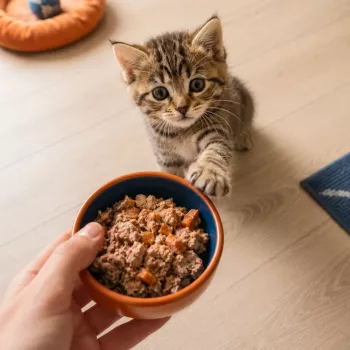
Wet food can help with hydration and is often easier for young kittens to eat, while dry kibble can be convenient and calorie-dense. Many owners do well with a mix: wet meals for moisture plus a measured amount of dry food. Whichever format you choose, the healthiest option is one your kitten eats consistently and tolerates well (normal stool, steady weight gain, bright energy).
Feeding schedule matters for healthy growth
Young kittens generally do best with multiple small meals per day rather than one or two large feedings. Consistent meal times also make it easier to monitor appetite—one of the earliest signs of illness in kittens.
What to avoid
Avoid cow’s milk (many kittens are lactose intolerant), seasoned table food, and homemade diets unless formulated by a veterinary nutritionist. Even small nutrient imbalances can affect growth.
For a deeper breakdown of what to look for on labels and how to choose between wet and dry, visit the main guide on healthiest kitten food.
FAQ
How often should a kitten eat each day?
Most kittens need 3–4 meals per day when they’re very young, then can gradually transition to fewer meals as they approach adulthood. Follow the feeding chart on the food label and adjust based on your kitten’s body condition and your veterinarian’s advice.











Leave a comment